Sunday, August 25, 2013

Stones


Lili can safely play with stones

My two “little” granddaughters (ages 5 and 3) were visiting last week.  At one point, Lili, the three-year-old, picked up some rocks from the parking strip in front of my building and started throwing them.  My reaction was visceral – I grabbed her arm and started to shout at her, fearful for her life!

Almost immediately, I realized what I was doing and I calmed down.  We were in Portland, Oregon, not in Palestine, and the IDF was not about to detain this child for rock-throwing!

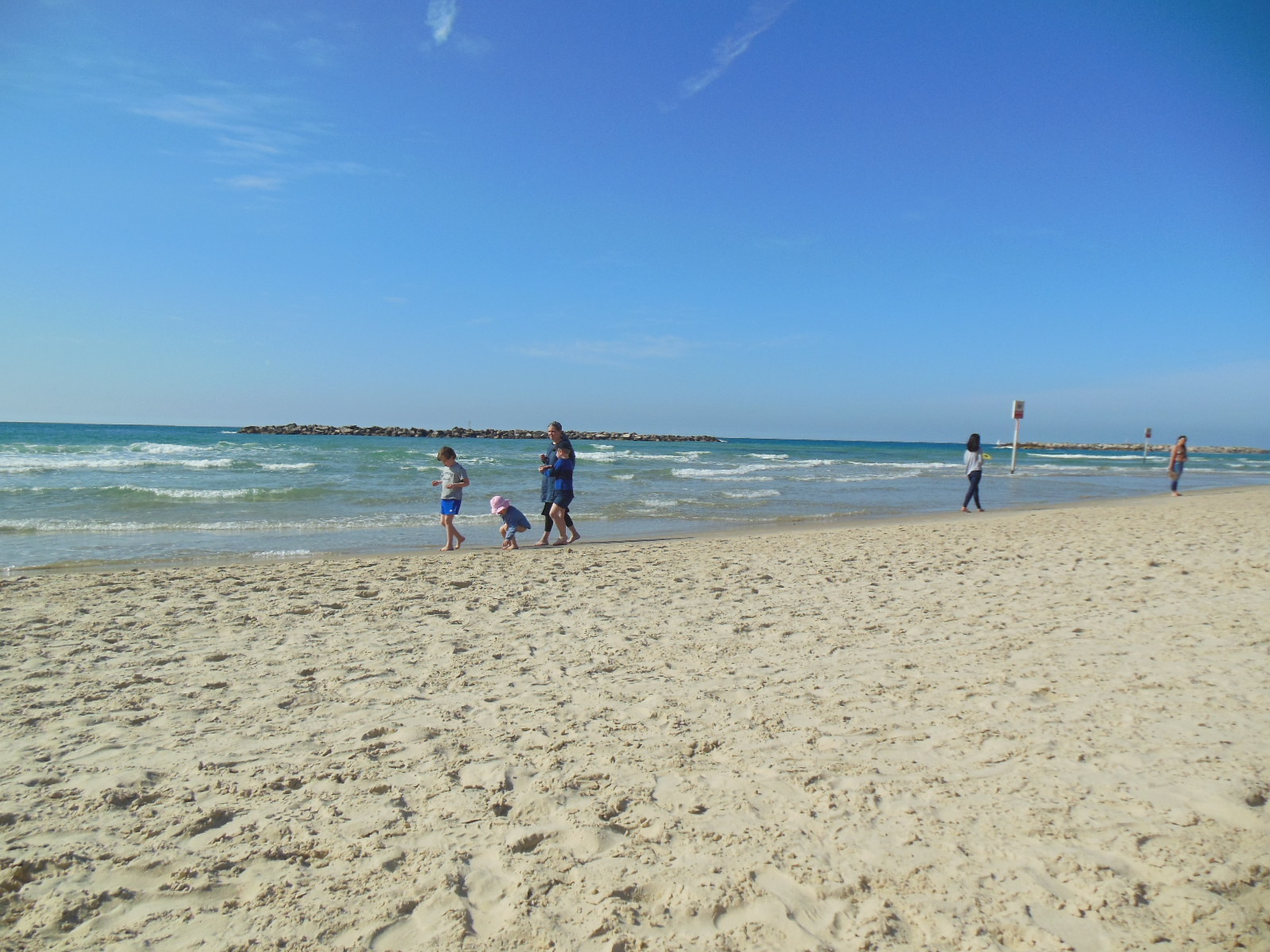
Later, while on the Oregon coast with the girls, I noticed several children picking up rocks and aimlessly throwing them.  “It’s what kids do,” I remember an EA friend saying last year after her return from Bethlehem, and before my departure for Tulkarm.

While other grandparents watched their grandchildren idly tossing rocks as part of their beach play, I remained uneasy.  “They’re just being kids,” said a grandmother sitting beside me. 

“It’s fine -  here,” I said – “I just think about what would happen if we were in Palestine,” I added, at which point I launched into stories of children detained for rock-throwing across the West Bank (see blog post “Please Pray for the Children" – July 14, 2013). 

I was, of course, grateful that my grandchildren would never have to live in fear of being detained by soldiers for an innocent game, but my heart remained heavy as I thought of the children who would never enjoy the childhood pleasures that these youngsters took for granted.

Elias Chacour speaks at Mar Elias
And then I started thinking about another kind of “stones” – the living kind, as the Palestinian Christians frequently call themselves.  I remember my first visit to Palestine in 2008 – the first time I understood it as an actual place – and hearing Elias Chacour speak at Mar Elias.

“We are the living stones,” he told us.  “We are the descendants of the first Christians, the ones who were here at the time of Christ.  People come here to see the stones, the ancient land, but they don’t see us.”

During my stay in Palestine, I met other living stones.  Not a lot – remember, I was living in a Muslim city in which remained only one church, which had been burned during the violence of the second Intifada and later restored. 

Daoud and his son
But, while in Tulkarm, I met Daoud, one of three remaining Christians in what had once been a vibrant Christian community.  He was the self-appointed caretaker of Mar Gerias, the once-vibrant Greek Orthodox church that Daoud and a cadre of Muslim friends had lovingly re-built after the fire.  And at the time of our meeting, he was building toilet facilities for the rare visitors who came long distances for occasional services at the church.

We also met Moana, an Anglican who could only rarely attend worship because she worked on Sundays (the Middle-Eastern weekend is Friday and Saturday), and her mother, who was housebound and depended upon visitors for her fellowship.

Unlike the stones thrown by the children, which appear to be limitless, the “living stones” are in danger of extinction.  The Israeli government blames Muslim “persecution” for the departure of the Christians but, based upon my observations and interviews, it is far more likely that the Israeli government itself is to blame.
Greek Orthodox Church Mar Gerias

While I observed nothing but courteous and friendly relationships between the Christian and Muslim “Arabs” (the pejorative term by which the Israelis lump both groups), the actions of Israeli soldiers, settlers and “government policies” themselves seem to be the real reason that Palestinian Christians leave to seek more hospitable surroundings. 

When one wants peace, it is difficult to live in a situation that breeds war.  And when one’s children are being threatened, a move to safety is the natural reaction.  So I pray for the stones – that the living ones will have the strength to stay in the face of adversity and that the children can play without fear.

Friday, August 9, 2013

Change


Recently, while doing a presentation about my experiences in Palestine, I was asked, “What kind of a change did your time there have on you?”  It isn’t the sort of a question one expects from a stranger – it isn’t even the sort of question that family members and friends have asked me much.  And I’m not sure my spur-of-the-moment answer - something about having been told it would be a “life changing” experience (which it certainly was!) - could possibly cover the impact that Palestine had on me!

During “de-briefing” – both in Jerusalem and in Washington D.C. – we were told the symptoms of “post-traumatic stress” syndrome, and given practical “hints” on how to deal.  I thought I did pretty well in those early days – if you can disregard the tears when I tried to relate some of the sadder stories, head-shaking about people who didn’t “get it” and an obsessive need to explain the entire Palestine/Israel “situation” to casual acquaintances (in 50 words or less!).

Not surprisingly, I soon recognized that many people – probably most people – weren’t all that interested, either in my personal experiences, or in the “big picture” of what life under Occupation was – either for me in the short term, or for my Palestinian brothers and sisters in the long term.

Most people have their own lives to live and their own concerns to deal with.  Whether these concerns were of a personal nature or a “cause” in which they believed as strongly as I believe in ending the Occupation, I soon realized that I couldn’t expect them to embrace this issue with the same fervor that I did!

But how did this experience change me?  Well, I realized while still there that I liked being outside my “comfort zone;” I liked dealing with new challenges!  I had to do things that I didn’t really want to do (who wants to get up at 3:15 am for checkpoint duty?), but I also did a lot of things that expanded my horizons.

Poppies, I am told, are a symbol of perseverance!
I learned to approach “strangers” and listen to what they had to say (sometimes directly and sometimes through an interpreter!).  I sat in front of a computer and forced myself to write – reports, blog posts, letters – and re-discovered the joy I found in expressing myself in writing.

Now that I am home, and am involving myself in “advocacy,” I find myself feeling much more comfortable about approaching people to ask for things (“Would you like me to come speak to your group?”) and, indeed, to speak to “strangers,” be they in large groups or individually.

The “pep talks” I give myself are along the lines of, “What are you afraid of?  You were doing this in Palestine and you didn’t even speak the language there!”

I also find I am more empowered to speak to issues that concern me – and not to worry what other people think.  But, at the same time, I find myself listening more, and talking less, trying to see where the other person is coming from instead of jumping in with my opinion. 

Patience, which was never one of the virtues with which I was blessed, has entered my life.  No longer do I tap my feet and breathe out sighs of exasperation when waiting for someone or something.  I find I can sit quietly and just think (is this meditating?), enjoying the feeling of the sun on my face or watching people as they walk by me.  Again I am reminded of the Palestinians.  If they can remain patient after 65+ years of waiting for a homeland, I can wait 15 minutes for my lunch date or bridge game!

Reports of a child being arrested, a community being demolished, an olive grove being burned can still move me to tears – followed by a rush of anger. 

"If I can move just one grain of sand on the beach..."

How dare they?!  And why does my country continue to be complicit in these "war crimes"?
But then I remind myself of what I said before I left on this journey.  “If I can move just one grain of sand on the beach at Tel Aviv, I’ll feel I’ve accomplished something.”  And I did.


Saturday, July 27, 2013

Welcome to Israel - Now Go Home!!


Back in the 80’s, Oregon Governor Tom McCall became famous for posting signs on the major highways leading into his state.  “Welcome to Oregon – Now Go Home!” was the message they carried.  The governor was trying to make a point – he wanted tourists to come and visit, but he didn’t want the state to become overpopulated. 

I thought about that message – albeit in a different context - when I learned how the Israeli government was treating visitors who landed at Ben Gurion Airport (and, to a lesser extent, at the Allenby Bridge border crossing from Jordan).   Reading these reports, and talking to some of the people involved, it became obvious to me that Israel does welcome tourists – but only certain tourists. 

Church “pilgrimage tours” organized by Israeli tourist companies that mostly stay in Israel proper (with maybe a quick, well-chaperoned stop in Bethlehem) are warmly welcomed.  Christian clergy, coming to learn more about the Israel/Palestine “conflict” and maybe visit colleagues in the West Bank?  Welcome to Israel – and, by the way, please sign this paper that says you won’t visit the West Bank. 

Volunteers coming to work with one of the numerous NGOs who are working for peace in both Israel and Palestine?  Hours of questioning – and a good chance of being denied admittance.  Palestinian Americans (i.e. US Citizens who happen to be of Palestinian heritage) coming to visit family or see their homeland?  Forget it!  Chances are good that the only glimpse of their homeland will be the inside of an interrogation room until they are sent back to the U.S.

Tulkarm Team 47 - Spring, 2013
Coming into Ben Gurion Airport in October of 2012, and again in February of this year, I didn’t have any problems.  Caucasian senior citizen, grey hair and wearing cross – I looked the part of a pilgrim and was admitted without questions.  My Peruvian EA teammate – twenty-one-year-old dark-skinned male?  Five hours of questioning and having his luggage searched before he was admitted.  (Not to mention additional interrogation every time he crossed a checkpoint between Palestine and Israel!)

I’ve heard anecdotes about Israeli’s draconian entry (and exit!) policies from many different sources – but when I heard that my own government was about to aid this “institutional racism,” I had to mount my soapbox!

I write today to draw attention to legislation that is currently pending in the US Congress.  As international travelers may be aware, the US has a “visa waiver” program that allows visitors from other countries to enter the U.S. without first obtaining a visa.  This is a reciprocal program – which is to say that the participating countries have agreed that they will admit US citizens without a visa.  So far so good!

Enter the US-Israel Strategic Partnership Act of 2013 (SB 462), introduced by Sen. Barbara Boxer (D-CA), and co-sponsored by 40 senators, including my very own Sen. Ron Wyden (D-OR).  This bill would allow Israel into the visa waiver program – but with a difference.  Israel would NOT have to allow all US citizens into Israel; they could refuse to admit those who they deem a “security risk” (i.e. Palestinian Americans, peace activists – even clergy).  Israel would be the only country of the 37 currently in the visa waiver program that would be allowed to make this distinction.

Because most people do not closely follow the day-to-day doings of the United States Congress, I share what I know about this proposed legislation in the hope that Americans reading this post will contact their elected officials to let them know that they do not want Israel to receive “special” treatment – especially when such treatment results in discrimination against our own citizens!

Let’s show the politicians that AIPAC isn’t the only voice out there – we care and we vote!  Call, e-mail, and write YOUR elected representatives – TODAY!!

Sunday, July 14, 2013

Please Pray for the Children!


I get a lot of my news from the Internet these days.  First of all, our “local” daily newspaper, The Oregonian, is a thin shadow of its former self.  Not only do its sketchy local reports make TV news look “in-depth,” its international news consists of one page (including advertisements!) with one-paragraph stories that range from Russia to Syria to Ireland.

No, if I want to know what is going on in the world – and specifically in Palestine/Israel - the Internet is not only my best option – it’s the only option!  (With apologies to Washington Reports, whose in-depth coverage of the Middle East is awesome, but as a less-than-monthly magazine, by necessity its reports are often dated.) 
Five-year-old and his father (blindfolded) detained by Israeli soldiers
So, although my “fat” Sunday Oregonian had no coverage of the story of a five year old Palestinian boy being arrested/detained (sources vary) in Hebron, last night and this morning I read three different versions of this story on line.

One story said that the boy was five years and nine months old – the exact age of my next-to-youngest granddaughter, Cora.  I wondered if they, perhaps, shared a birthday.  Does he, like Cora, likes to have “chapter books” read to him (she’s into “Boxcar Children” and the “Little House” books)?  Will he start school this year too?  I’m sure, were they to meet, they would simply see each other as potential playmates; children of that age don’t see differences as we adults do.

Cora can enjoy just being a kid!
But mostly I thought of the trauma he must have suffered at the hands of the Israeli soldiers.  The photos accompanying this piece are second-hand, lifted from images that accompanied on-line stories.  I share them here with the hope that those who read this will be as outraged as I am – and will share this story with those whose eyes are still closed about the apartheid regime in Israel, and the United States’ blind support of this sort of terrorist activity.

The “story” seems to be that this little boy may (or may not) have been throwing stones at Israeli vehicles, and the soldiers decided to make an example of him.  As anyone who has spent any time around them know, children have been throwing stones since time immemorial!  Yes, there probably is more of it in Palestine and Israel – they’re readily available there, and children have fewer options for “constructive” play, such as my granddaughter and others like her can enjoy here.

But Palestinian children are not the only stone-throwers in that part of the world.  Israeli children, particularly settler children, throw stones at the Palestinian farmers whose land the settlers are “occupying.”  They throw them at Palestinian cars, and at Palestinian homes.  Are they arrested or detained?  Of course not!  The worst thing that can happen to them is that they are told to go home.

Five-year-old being detained by Israeli soldiers
Israeli law provides that Israeli children under  18 receive special treatment if they do happen to be detained by authorities. The same law provides that Palestinian children 16 or older are treated as adults. And even this law is not followed, as can be seen by the detention of this five-year-old! Sadly, stories about Palestinian children being arrested and/or detained are not uncommon in the news sources I follow, although, until this report, the youngest child “detainee” I ever read about was 7!

I could go on about the sadness and the unfairness of this “situation,” which apparently has been continually deteriorating even in the short time since I left in late April.  I could use that popular expression, “What were they thinking?” with reference to the actions of the soldiers. I could also tell you what I would have done to those soldiers if Cora had been the detainee in that story (or maybe I couldn’t because I’d already be incommunicado behind bars!). 

But… The sermon that I heard this morning in church talked about “compassion fatigue” – about turning your cares over to God and not worrying about all the things you cannot change.  So, I’m just going to ask everyone reading this story to give the children in your lives an extra hug today.  Tell them how much you love them.  And pray these atrocities will end!
 

To read more about this incident:
 
http://www.haaretz.com/news/national/watch-idf-soldiers-detain-five-year-old-palestinian-for-stone-throwing-in-hebron.premium-1.535260

http://972mag.com/one-childs-arrest-in-hebron-embodies-the-sickness-of-an-entire-regime/75625/?fb_action_ids=10200272778293132&fb_action_types=og.recommends&fb_source=aggregation&fb_aggregation_id=288381481237582